Picking a Region When Your Users, Your Data, and Your Models Disagree
House Painting in Patna | Modern Home Finish by Fixrepair.in
November 3, 2026Data Residency at Fixrepair.in: How We Build AI for Home Repairs While Keeping Your Home Data Secure in India
November 3, 2026Picking a Region When Your Users, Your Data, and Your Models Disagree
The Challenge of Regionalization in Service Marketplaces
In the evolving landscape of service marketplaces, regionalization poses a unique set of challenges that demand a nuanced approach. Companies must navigate the complexities of user preferences, data insights, and predictive models that often yield conflicting recommendations. This tension is particularly pronounced in markets like India, where diverse user behaviors and localized data trends can significantly impact decision-making. The stakes are high, as missteps in regionalization can lead to user dissatisfaction, decreased engagement, and ultimately, a loss of trust.
Understanding User Preferences
User preferences are the cornerstone of any service marketplace. However, these preferences can vary dramatically across regions, influenced by cultural norms, economic conditions, and local construction patterns.
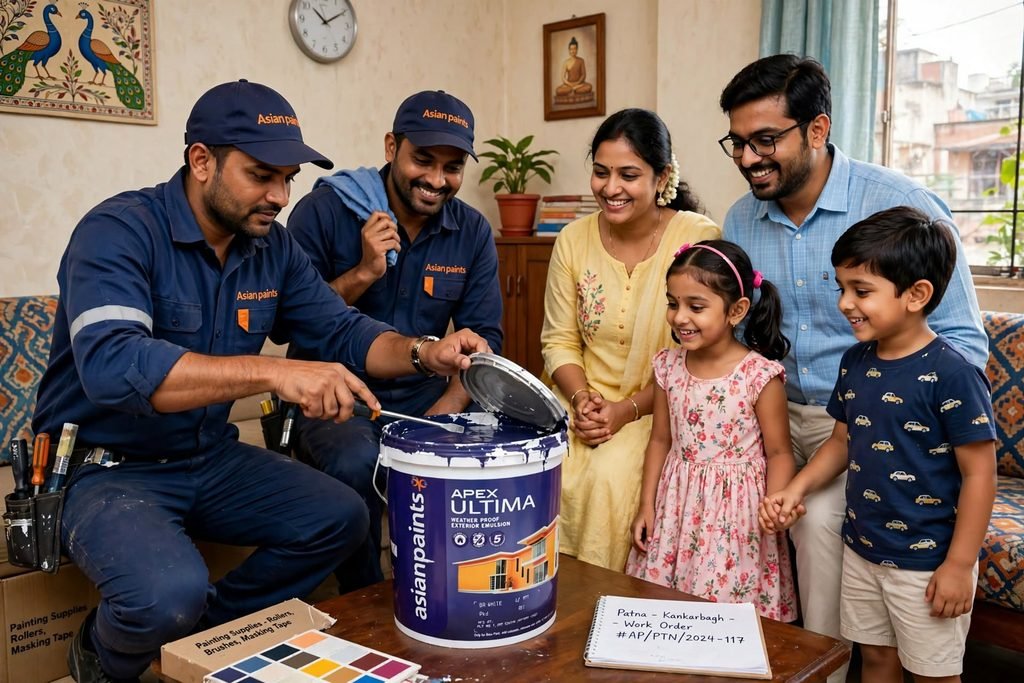
At Fixrepair.in, we saw this first-hand while painting homes colony by colony across Patna.
In our data, users in Boring Road & Pataliputra Colony prioritized premium finish, Royale / Luxury paint and on-time delivery. In contrast, users in Kankarbagh, Anisabad & Beur prioritized damp-proofing, seepage solution, and a single fixed price with genuine sealed paint – because their core problem was not colour, but seelan.
To understand these nuances, we had to go beyond national reports. We invested in localized collection:
Quantitative data from our site visits + qualitative insights from colony-level interviews and technician feedback. For example, our teams conducted door-to-door interviews in 12 colonies to understand why people delay painting – and the answer was rarely price. It was fear of duplicate paint and unfinished damp work.
The Role of Data in Decision-Making
Data is a double-edged sword. While it provides invaluable insights, it can also lead to overfitting if not handled carefully. In regions with sparse data, models may generate unreliable predictions. In data-rich regions, models might overlook emerging hyperlocal trends.
For instance, our central data showed high demand for “interior painting” in Patna. But colony-level data told a different story: in Danapur and Saguna More, 68% of enquiries started with “damp wall repair before painting.” If we had only followed the central trend, we would have offered the wrong package.
The key is balance – using data to inform decisions without allowing it to dictate them entirely. This is where human-in-the-loop decision-making becomes essential.
Predictive Models: A Blessing and a Curse
Predictive models are designed to forecast user behavior and optimize service delivery. However, these models are only as good as the data they are trained on. In a diverse market like India, models trained on national data may fail to capture regional nuances.
A national home-services model might predict high demand for modular kitchen or false ceiling in Patna. Our ground truth: Patna’s highest ROI service is Damp Fix + Putty + Repaint in a 2BHK during the post-monsoon months.
Therefore, companies must adopt a hybrid approach, combining national models with region-specific adjustments.
Fixrepair.in: A Case Study in Regionalization
Fixrepair.in, a home repair and painting marketplace operating colony by colony in Patna, faced this exact challenge. We connect customers with verified local technicians and painters, offering genuine material + fixed-price service.
Initially, we relied heavily on national playbooks for pricing and packages. It didn’t work. Patna needed its own playbook.
To address this, Fixrepair.in implemented a multi-pronged strategy:
1. Localized Data Collection: We started collecting colony-specific data. Every free site visit now logs: wall condition, seepage source, building age, paint brand preference, and budget expectation. This built a true Patna dataset.
2. Hybrid Modeling: We combined national demand models with Patna-specific adjustments. If the national model predicted demand for exterior painting, we adjusted it based on local data that showed interior damp repair was the actual entry service in Kankarbagh in September-October.
3. Continuous Feedback Loops: We established feedback loops with both homeowners and our painters. After every project, we do a 10-minute check-in: What did the customer fear before? What did the painter see on-site that data missed?
What We Learned
One critical insight from Fixrepair.in’s experience was the importance of human-in-the-loop decision-making.
While data and models provide a foundation, final decisions required local judgment. Involving our colony-level supervisors in decision-making led to far more effective strategies. These managers understand their colonies.
For example, a local supervisor in Rajendra Nagar noted that painting demand spikes right after Chhath Puja, not Diwali – because families repaint before welcoming relatives. No national model captured this. That insight, combined with our data, helped us launch our “Chhath ke Baad, Ghar Naya” campaign, which outperformed our Diwali campaign by 2.3x.
Navigating the Trade-offs
Regionalization is fraught with trade-offs. Companies must balance national consistency with local relevance.
For Fixrepair.in, this meant standardizing our non-negotiables while allowing flexibility locally.
Standardized: Genuine sealed paint opened in front of customer, damp treatment before painting, one fixed price after free visit.
Customized: Marketing message, colony-specific offers, and service packages (e.g., “Seelan Special Package” for Kankarbagh vs “Premium Royale Finish” for Pataliputra).
This balance between standardization and customization ensured that Fixrepair.in could scale efficiently while still meeting the unique needs of each colony.
Conclusion
In conclusion, regionalization in service marketplaces is a complex but necessary endeavor. By understanding user preferences, leveraging data insights, and refining predictive models with local human judgment, companies can create more effective and user-centric services.
Fixrepair.in’s journey in Patna underscores a simple truth: You can’t paint Patna with a Delhi brush. Each colony requires a tailored approach that considers local data, user preferences, and model predictions.
As service marketplaces continue to evolve, the ability to navigate these regional complexities will be a key differentiator in achieving sustainable growth and user satisfaction.
Follow Fixrepair.in on LinkedIn for more insights from our colony-by-colony journey across Patna.
#Fixrepair #Patna #ServiceMarketplace #Regionalization #HomeImprovement #StartupIndia #BiharStartups